A clear, complete guide to Transcranial Magnetic Stimulation — the non-drug, FDA-cleared therapy that treats depression at its source in the brain.
TMS — Transcranial Magnetic Stimulation — is a non-invasive, non-drug therapy that uses focused magnetic pulses (similar to those used in an MRI) to stimulate the underactive nerve cells in the mood-regulating regions of the brain.
Depression is a biological condition. Rather than sending medication through your whole body, TMS works precisely where it's needed — gently "waking up" the brain circuits behind depression, with lasting effects.
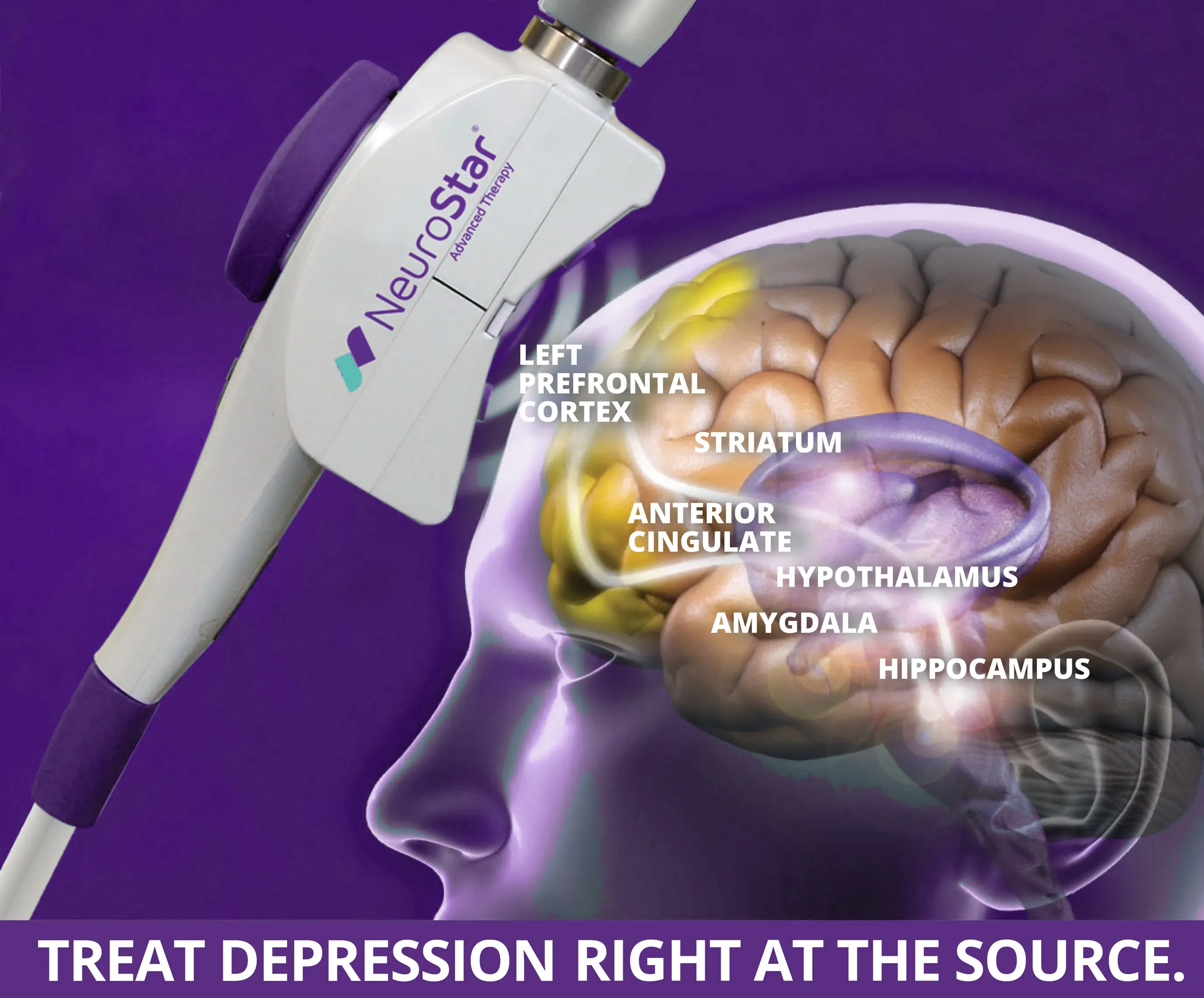
In depression, certain brain circuits that regulate mood become underactive. TMS delivers gentle, focused magnetic pulses to these areas, stimulating the neurons and encouraging them to fire again — like physical therapy for the brain.
Over a course of treatment, this repeated stimulation helps restore healthier connectivity and improves the brain's ability to regulate mood — an effect that often lasts well beyond the treatment itself.
We precisely locate your optimal treatment site using a personalized motor-threshold protocol.
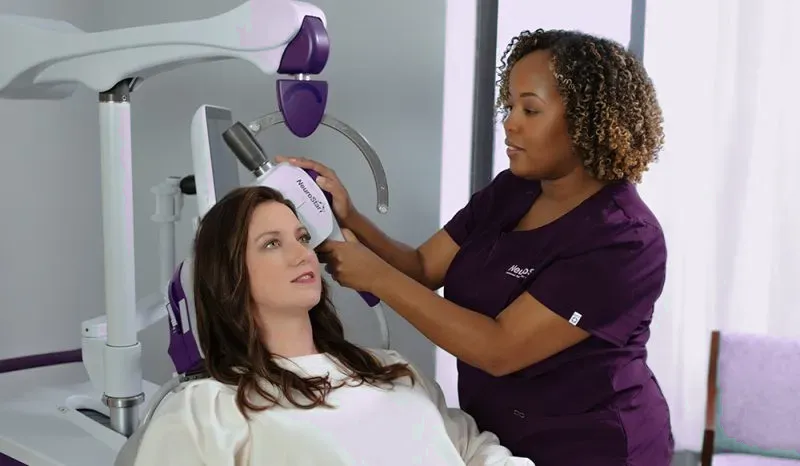
A magnetic coil is positioned comfortably over the left prefrontal cortex — the mood-regulating region.
Gentle, focused pulses stimulate underactive neurons, reactivating dormant connections.
Repeated sessions restore healthier connectivity and lasting mood regulation.
Both can help — they simply work differently. For many people, TMS succeeds where medication couldn't, and the two can even complement each other.
TMS is not a replacement for medication in every case. We'll help you understand which approach — or combination — is right for you.
TMS is very well tolerated and has been used in millions of treatments. Because it doesn't circulate through the body like medication, it avoids the systemic side effects patients often worry about.
Mild scalp discomfort or a light headache during the first week — which typically fades quickly.
Unlike medication, no weight gain, drowsiness, nausea, or sexual side effects.
Seizures are a very rare risk (well under 0.1%). TMS isn't suitable for those with non-removable metal implants in or near the head — we screen carefully for safety.
TMS is backed by extensive research and millions of real-world treatments.
TMS has been researched for years and refined into today's precise, effective protocols.
Cleared for major depression, anxious depression, OCD, and adolescent depression (15–21).
Millions of treatments show meaningful, lasting relief for people with hard-to-treat depression.
Efficacy figures reflect patients completing a full course of NeuroStar treatment, as reported by NeuroStar clinical data. Individual results vary.
We review your history and goals to confirm TMS is right for you.
Your first visit personalizes the treatment to your brain.
About 36 sessions total — roughly 5 days a week, each around 19 minutes.
Sessions gradually reduce over the final few weeks.
Because TMS changes brain function, results are often durable long after treatment.
Start with a free, confidential 15-minute consultation — we'll answer every question.
Schedule your free 15-minute consultation to learn more about your treatment options. During this no-obligation consultation, we'll: